
You made it through another South Jersey winter – but your gutters might not have come out unscathed! As the season’s first big downpours hit, it’s worth understanding why gutter maintenance matters most right now.
Winter’s Hidden Damage
Months of freezing temperatures do more than make your morning commute miserable. Ice dams that form along the roofline put heavy, sustained pressure on your gutter system, and repeated freeze-thaw cycles can loosen brackets, pulling gutters away from the fascia and warping troughs out of alignment. The damage isn’t always obvious from the ground, but it’s there, quietly setting the stage for bigger problems once the rain picks up.
The April Showers Problem
When gutters are clogged with winter debris or compromised by structural damage, they can’t do their one job: move water away from your home. Instead of flowing through downspouts, rainwater pools, overflows, and runs straight down the side of your house.
That overflow soaks into the soil around your foundation, and over time, it leads to basement flooding, foundation erosion, and water damage that gets expensive fast. One heavy spring storm is all it takes to turn a neglected gutter system into a serious repair bill.
5-Point Spring Gutter Maintenance Checklist
Now that you know what’s at stake, it’s time for a hands-on gutter cleanout. Work through these checkpoints before the spring rains pick back up!
1. Clear Out the Winter Sludge
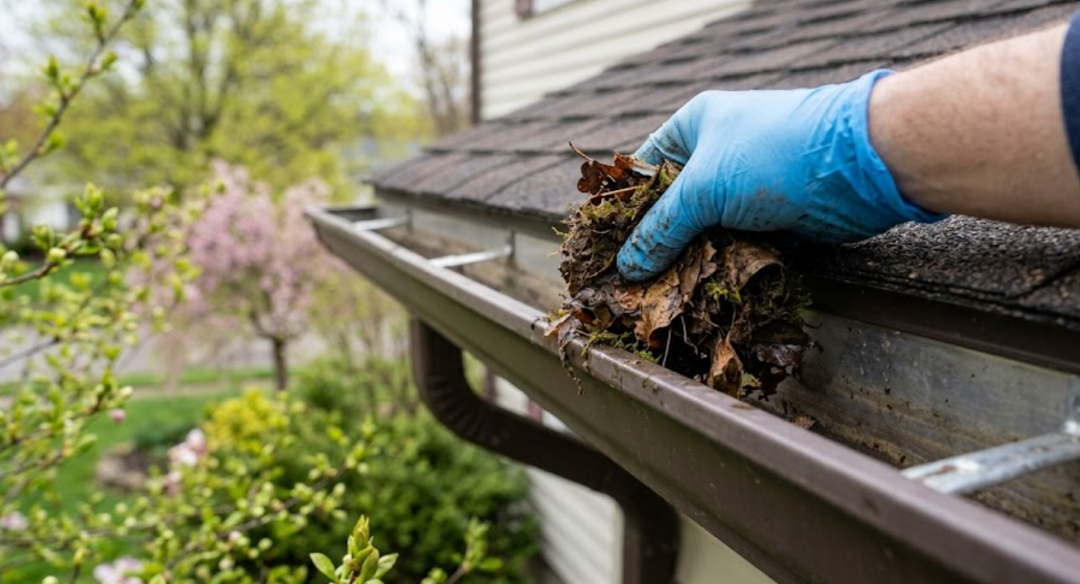
Leaves, pine needles, and roofing grit break down over the winter into a thick, compacted sludge that sits in your gutter troughs. It doesn’t wash away on its own. Instead, it just dams up and holds water in all the wrong places. Scoop it out by hand or with a gutter trowel, and bag it as you go.
2. Test the Pitch
Your gutters need a slight angle toward the downspouts so water actually moves. After a rough winter, sagging and settling can throw that pitch off. Look for standing water in your troughs after a light rain – if it’s pooling instead of draining, the slope needs to be corrected.
3. Inspect Joints and Seams
Does your home have sectional gutters? In this case, corners and seams are the weak points. Check for dripping or staining at every joint, as those small leaks worsen quickly once spring storms start hammering them consistently.
4. Check Downspout Clearance
A clean gutter doesn’t help much if the downspout is clogged or dumping water right at your foundation. Make sure the exit point is clear and that water is being directed at least 4 to 6 feet away from your home. Should your current setup fall short, extensions or splash blocks can help make up the difference.
| ✅Pro Tip: Not sure if your downspouts are clogged? Run a garden hose at the top of the gutter. If water doesn’t gush out the bottom within seconds, you’ve got a hidden blockage in the elbow. |
5. Tighten Up the Hardware
Take a step back to look at your gutter line. If it looks wavy and uneven, you probably have popped spikes or loose hangers – a common result of ice expansion during winter. These need to be resecured before a full section pulls away from the house.
DIY or Call a Pro? A Safety Reality Check
You can absolutely handle some of this yourself, especially if you’re comfortable on a ladder and your home is single-story. But before you commit to a full day of gutter work, here are some considerations.
The Ladder Factor
Gutter work means ladder work, and ladder work on a two-story home is genuinely risky. Uneven ground, wet rungs, and reaching overhead while holding tools are how falls happen – and falls from ladders send homeowners to the emergency room every year. If you’re not doing this kind of work regularly, the risk isn’t worth the savings.
What You Might Miss
A professional gutter cleanout goes beyond scooping debris. A trained crew is also checking for fascia rot behind the gutter line, signs of water damage at the roofline, and early-stage issues that don’t look like much until they turn into major repairs.
The Time Factor
There’s also the straightforward math of it. What takes a homeowner most of a Saturday (i.e., dragging out the ladder, repositioning it every few feet, bagging debris, hosing everything down), a professional crew can knock out in about an hour. Exactly when to clean gutters in spring is partly about timing the season, but it’s also about being realistic with your own schedule.
South Jersey’s Gutter Challenges
While general gutter maintenance tips apply everywhere, living in South Jersey means your gutters face a few things homeowners in other parts of the state don’t think twice about.
The Pine Barrens Effect
If your property is anywhere near the Pines, you already know about the yellow dust that coats everything each spring. That pollen, combined with the steady drop of pine needles year-round, creates a thick, sticky sludge inside your gutters that’s heavier (and harder to clear) than typical leaf debris.
It also breaks down into a paste that can block downspout elbows even when the troughs look relatively clear from the ground. In short, homes near wooded areas almost always need more frequent cleanings than the standard twice-a-year recommendation.
Shore Wind Wear
For homeowners closer to the coast, the concern shifts from debris to hardware. Salt air accelerates corrosion on metal components – brackets, screws, and the gutters themselves if they’re aluminum or steel.
On top of that, the stronger coastal winds that come through during spring storms can loosen hangers and shift gutter alignment. If you’re within a few miles of the shore, check your hardware more closely, watching for early signs of rust or pitting on metal surfaces.
Long-Term Solutions: Set It and Forget It
If you’re tired of climbing ladders every season, certain upgrades can reduce how often your gutters need attention.
Gutter Guards
Gutter guards are one of the most common questions we get, and the honest answer is: they help a lot, but they’re not maintenance-free. A quality guard system will keep out leaves, twigs, and larger debris, which dramatically reduces how often you need a full cleanout. However, fine particles can still work their way through.
When you’re preparing to clean gutters in the fall or spring, guards make your job faster and less frequent. For South Jersey homeowners, especially, they’re well worth the upfront cost.
Seamless Gutter Upgrades
If your home still has older sectional gutters, you probably noticed a theme in the inspection checklist: joints and seams are where most problems start.
Seamless gutters eliminate those weak points. They’re custom-cut to fit your roofline in one continuous piece, which means fewer leak points, less maintenance over time, and a cleaner look on your home. It’s one of those upgrades that pays for itself quietly, preventing the small issues that turn into expensive repairs when they go unnoticed.
Get Your Gutters Spring-Ready with Van’s
Winter did its worst – now it’s time to make sure your gutters are ready for what’s next. Our experienced team has been keeping South Jersey homes protected since 1948, and we’d love to help with yours. Contact us today for a free estimate or to learn more about our scheduled Maintenance Program!