
Winter means facing a set of weather challenges that can be brutal on your home’s most essential water defense system: your gutters. To protect your investment, winter gutter maintenance should be at the top of every homeowner’s to-do list.
Across South Jersey, from the Shore to the Pine Barrens, your rain gutters are on the front lines against a tough combination of coastal weather and inland cold. Our region is notorious for its relentless freeze-thaw cycles, where warm spells melt snow and ice, only for temperatures to plummet overnight and refreeze the water. This constant expansion and contraction is a wrecking ball for clogged, neglected gutters. Add the occasional Nor’easter whipping through with heavy, wind-driven rain and snow, and you have a perfect storm of conditions guaranteed to push your gutter system to its limit.
Neglecting winter maintenance for your gutters can quickly turn a small, preventable issue into a major, five-figure headache. When water can’t drain properly, you risk:
- Foundation Damage: Overflowing water saturates the soil around your home, leading to erosion and potentially costly foundation cracks and basement leaks.
- Ice Dams: Clogged, frozen gutters prevent water from draining, forcing it back up under your roof shingles. This can rot your roof decking, insulation, and framing.
- Rotting Fascia/Siding: Constant overflow keeps the wood and trim of your roofline damp, creating the perfect environment for wood rot and inviting pests.
At Van’s Rain Gutters, we’ve seen it all, and we know that a little proactive winter gutter maintenance goes a long, long way in this climate.
Common Gutter Problems in Winter
The unique challenges of our region can easily magnify small gutter issues into costly home emergencies.
Ice Dam Formation and Warning Signs
An ice dam is a ridge of ice that forms at the edge of the roof (the eave) and prevents melting snow from draining off the roof. This is, unfortunately, the single most destructive gutter-related problem locally.
They are caused by a heat imbalance. Here, heat from your attic (due to poor insulation or ventilation) melts the snow on the warmer, upper part of your roof. Water then runs down the roof until it hits the cold overhang or the gutter, where it refreezes. An ice blockage grows, forcing the water to back up under your shingles.
Warning signs of a potential ice dam include:
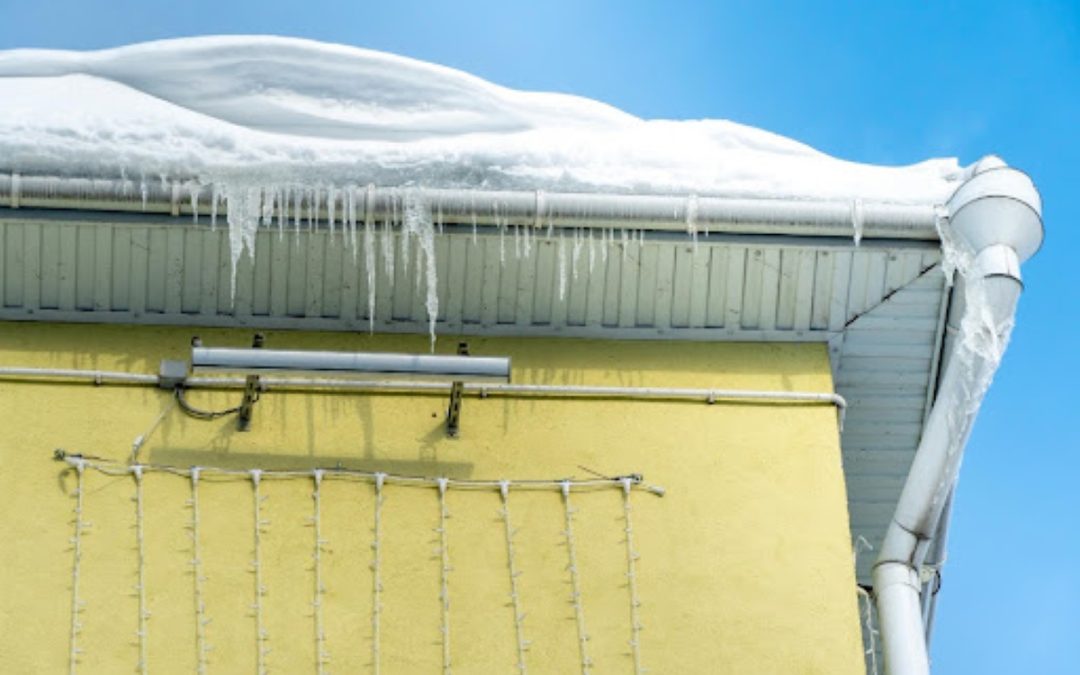
- Icicles hanging from the gutter system.
- Water stains on interior walls or ceilings near exterior walls.
- Water spilling over the top of the gutter, even when the snow is melting slowly.
Frozen Downspouts
The downspout is the exit for all the water, and when it freezes solid, the entire system is paralyzed. In this case, a frozen downspout almost always starts with a clogged downspout.
Debris traps a small amount of water. When the temperature drops, this standing water freezes. The next round of melting snow/rain hits this ice, backs up, and freezes higher up the downspout, creating a solid, multi-foot column of ice. Since water cannot exit the downspout, it backs up into the main gutter trough, leading directly to overflow.
Note that you might also see a large, visible column of ice expanding out of the downspout opening.
Weight Stress from Snow and Ice Accumulation
Gutters are designed to handle the weight of water, but not the extreme weight
of frozen water. Heavy snow loads from a Nor’easter, combined with a clogged gutter full of frozen debris, create a massive, unrelenting weight. Such accumulation often exceeds what the gutter hangers are engineered to support.
Gutter Separation from Fascia Boards
The constant expansion and contraction of the freeze-thaw cycle directly assaults the hardware holding your gutters in place. As water and ice freeze inside the gutter, they expand with tremendous force, which repeatedly pulls on the gutter hangers. This cycling movement can widen the holes where the fasteners enter the fascia board, causing the gutter to pull away from the home.
If the fascia board itself is already compromised by previous water damage, the fasteners have nothing solid to grip, leading to a quick and catastrophic gutter separation.
Winter Monitoring: How to Keep Gutters from Freezing in Winter
The weather is extremely unpredictable. That’s why ongoing vigilance is crucial to identifying and addressing small issues before they escalate into major damage. At Van’s, we stress a safety-first approach: all observations and checks can (and should) be done safely from the ground.
What to Look for During and After Snowfall
Your job during winter is to be a detective for drainage problems. Never ignore the behavior of snow and meltwater on your roof!
After a storm, if you see the snow melting rapidly high up on your roof (near the ridge), but staying frozen and solid on the lower edge (near the gutters), this is the classic red flag for an ice dam in the making. The upper melt is caused by heat loss from your attic, while the refreezing at the edge is the danger zone.
If the sun is out and the roof snow is clearly melting, but you see no water (or a very slow drip) coming out of your downspout, it means the water is trapped. This indicates a massive clog or, more likely, a completely frozen downspout blocking the flow.
Use binoculars to look along the length of the gutter. Check for any visible sagging or bowing, which signals dangerous weight stress that is pulling the system away from the fascia board.
Icicle Formation Patterns That Indicate Problems
Some are benign and just frozen runoff, but others are serious warnings.
| Icicle Type | Indication | Danger Level |
| Thin, isolated, clear icicles | The general roof runoff freezes quickly. | Low |
| Thick, “curtain-like” ice masses | Massive amounts of water are spilling over the gutter lip. The gutter is either fully clogged or frozen solid. | Medium to High |
| Icicles are forming behind the gutter | Water is backing up and spilling down the fascia board, potentially entering the wall or attic. A clear sign of a significant ice dam. | High |
| Ice blockages at the downspout exit | A frozen downspout is preventing drainage, forcing water to back up into the gutter. | High |
When Not to Attempt DIY Fixes
We know the urge to tackle a problem head-on, but some winter repairs are simply too dangerous or damaging for the average South Jersey homeowner
Never Climb a Ladder on Snow or Ice: Do not attempt to climb onto your roof or use a ladder to reach the gutters when temperatures are freezing, or there is any snow or ice present. This is a severe fall risk.
Do Not Chip or Hammer Ice Dams: Using a hammer, chisel, or pick to chip away at an ice dam or frozen gutter is a guaranteed way to destroy your shingles, crack your gutters, and puncture your roof underlayment, leading to much worse leaks.
Avoid Salt or Ice-Melt: Throwing rock salt or chemical ice-melt onto your roof or into the gutters can corrode your metal gutters, discolor your shingles, and severely damage your landscaping when the brine drains off.
Preventive Upgrades and Solutions
While regular winter gutter maintenance is the baseline, certain upgrades can act as a permanent shield for your home. Here’s how to weigh your options for long-term winter protection!
Gutter Guards and Covers
Many homeowners ask us about the performance of gutter guards in winter. By keeping out the fall’s lingering oak and maple leaves, guards ensure your gutters aren’t “pre-clogged” when a freeze hits. This allows meltwater to flow freely rather than turning into a solid block of ice and debris.
However, in extremely cold conditions, some mesh guards can freeze over, causing water to bypass the gutter entirely and form icicles. We recommend high-quality micro-mesh systems that are durable enough to handle snow weight without collapsing.
In short, they are an excellent investment if you choose a professional-grade material that won’t warp under NJ’s heavy snow.
Heat Cable Installation
If your home is prone to ice dams despite having clean gutters, heat cables (also known as heat tape) might be your best ally.
These self-regulating electric cables are installed in a zigzag pattern along the roof edge and inside the gutters/downspouts. They create heated tunnels through the ice so that even in a deep freeze, meltwater has a clear path to the ground.
And a pro tip? You don’t necessarily need them on the whole house. Focus on North-facing rooflines or areas over decks and entryways where ice buildup is most dangerous.
Insulation and Ventilation
Many homeowners are surprised to learn that gutter problems often start in the attic. In our area, we aim for fiberglass insulation with an R-49 rating. A high R-value indicates strong resistance to heat transfer (i.e., heat can’t get in or out easily).
Proper insulation keeps your home’s heat inside the living space. If heat leaks into the attic, it warms the roof deck, melts the snow from the bottom up, and creates the dreaded ice dam cycle.
A balanced system of soffit vents (intake) and ridge vents (exhaust) keeps the attic temperature consistent with the outdoors. This prevents hot spots on the roof that cause uneven melting.
Downspout Extensions and Splash Blocks
Getting water out of the gutter is only half the battle; you now have to move it away from the foundation. Generally, it’s a good idea to incorporate extensions that carry water at least 3 to 6 feet away from the house.
You might also think about using heavy-duty concrete splash blocks rather than light plastic ones. Because high winds can easily toss plastic blocks across the yard, it could leave your foundation vulnerable to erosion and basement seepage during a mid-winter thaw.
When to Call a Professional
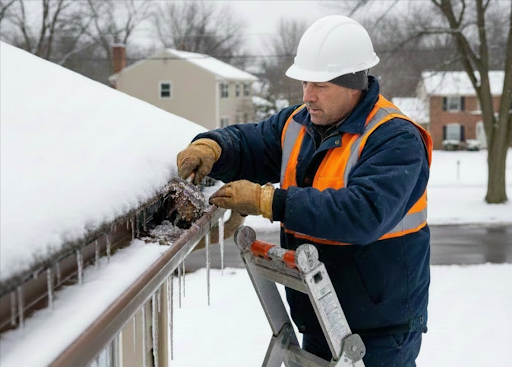
We’re all used to shoveling our own drives. However, when it comes to cleaning gutters in winter or making repairs, there is a very fine line between “handyman” and “hazardous.”
Here is when you should put down the ladder and pick up the phone.
Safety Concerns: The Danger of Winter Roof Access
The single biggest reason to call a pro is your personal safety. Black ice isn’t just a threat on the expressway; it forms on your roof and ladder rungs, too. Even a roof that looks clear can have a thin, slick film of ice.
What’s more, a gutter filled with frozen slush can weigh hundreds of pounds. If it decides to give way while you are leaning a ladder against it, the results can be catastrophic.
Our team uses specialized stabilizing equipment, fall protection, and footwear designed for traction on icy surfaces, all of which the average homeowner doesn’t have in their garage.
Complex Repairs
Should your winter inspection reveal more than just a few stray leaves, it’s time for expert intervention.
- Re-Pitching Gutters: If water is pooling and freezing in the middle of a run, the pitch (slope) is off. It requires precise measurements and hardware adjustments that are difficult to get right in freezing temperatures.
- Structural Damage: If your fascia boards are rotting or the gutter hangers have pulled out of the wood, a simple tightening won’t fix it. We can assess if you need a structural repair to be sure your gutters don’t end up on your lawn after the next Nor’easter.
- Seamless Integration: If a section of your gutter has split due to ice expansion, a patch is often just a temporary band-aid. The Van’s team provides seamless gutter replacements that eliminate leak-prone joints where ice loves to form.
Winter Emergencies
Sometimes, you can’t wait for spring. Call a professional immediately if you experience:
- Active Interior Leaks: Is water staining your ceilings or trickling down interior window frames? An ice dam has likely already breached your roof’s defense.
- Gutter Detachment: If a section of gutter is hanging by a thread or has completely pulled away, it is a physical hazard to anyone walking below it.
- Foundation Flooding: A frozen downspout can cause a massive “lake” to form against your foundation. In this case, you risk a basement flood the moment the next thaw begins.
Post-Winter Gutter Inspection
Once you are confident the final freeze has passed, it’s time to assess any damage your home may have sustained. Remember: a quick inspection now prevents the heavy April showers from turning into May basement leaks!
✅ Look upward from directly underneath your gutters. If you see daylight between the gutter and the fascia board, winter ice has likely pulled the fasteners loose.
✅ Stand at the corner of your home and look down the length of the gutter. It should be a straight, consistent slope. Look for any new dips, bows, or sags caused by heavy snow weight.
✅ Check the bottom of your gutter troughs for an accumulation of asphalt granules. Winter storms are abrasive to your roof; this “sand” needs to be cleared out so it doesn’t clog your downspouts.
✅ Inspect corners (miters) and end caps. Extreme temperature swings cause metal to expand and contract, which often cracks old sealant. If you see weeping joints, they need a fresh coat of high-grade silicone.
✅ Ensure the ends of your downspouts or extensions haven’t been buried by snow shoveling or clogged with winter mulch and mud.
✅ South Jersey winds and heavy meltwater often shift splash blocks. Reposition them so they are tilting away from your foundation.
✅ During the first real rainstorm of spring, do a quick walk-around. Verify that water is staying inside the gutters and flowing out of every downspout.
Weather the Winter with Van’s Rain Gutters
Is your gutter system showing signs of winter wear and tear? At Van’s Rain Gutters, we specialize in the unique drainage needs of South Jersey homes. Whether you need a simple tune-up, a professional cleaning, or a transition to a seamless system, we are here to help.
Contact our team today for a free estimate and keep your home protected all year long!